
Coral Gallery
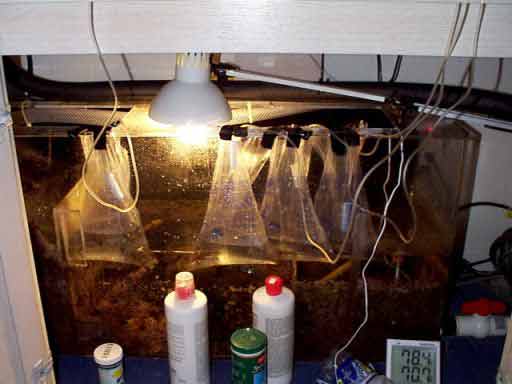
Drip Acclimation For Sensitive Critters
Drip acclimation is essential for sensitive marine invertebrates like snails, clams, and corals. This method slowly adjusts water parameters over time, reducing stress from temperature and water chemistry differences between the shipping bag and the tank. Pictured are four bags of snails floating in the sump being drip acclimated during mid-winter shipping.
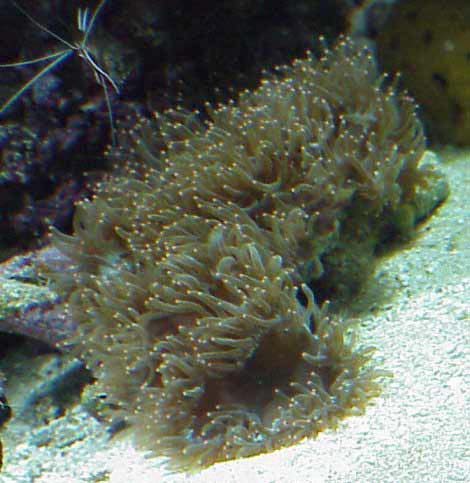
Ermaphytic Sceleterian Corals
LPS and SPS are acronyms for Large Polyped Stony and Small-Polyped Scleractinian corals. LPS corals are among the most beautiful due to their fleshy texture, vibrant colors, and movement in water currents. SPS corals are the fundamental reef builders with incredible growth rates - their skeletons create the backbone of reef structures.
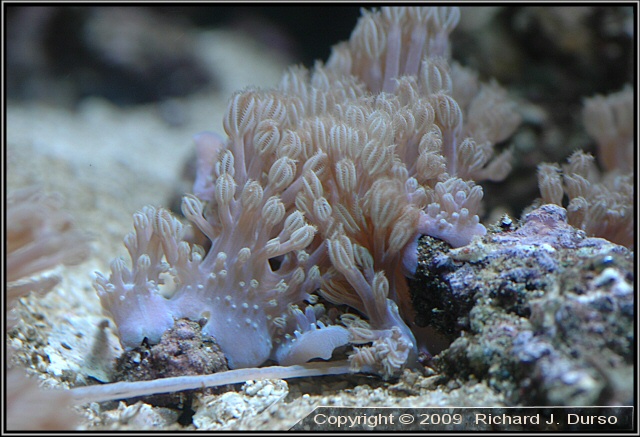
Soft Corals
Soft corals are octocorals with eight tentacles per polyp, distinguishing them from stony corals. Another characteristic is the presence of side branchlets called pinnules on each tentacle, giving them a feathery appearance. Unlike stony corals, soft corals do not build calcium carbonate skeletons and are generally easier to keep in home aquariums. They prefer moderate lighting and can thrive in a variety of water flow conditions.
LPS Corals
LPS (Large-Polyped Scleractinian) corals are among the most beautiful corals in the hobby due to their fleshy texture, vibrant colors, odd sizes and shapes, and their ability to move and sway in water currents. They are generally more forgiving than SPS corals and make excellent choices for intermediate reefkeepers. LPS corals typically prefer moderate lighting and water flow.
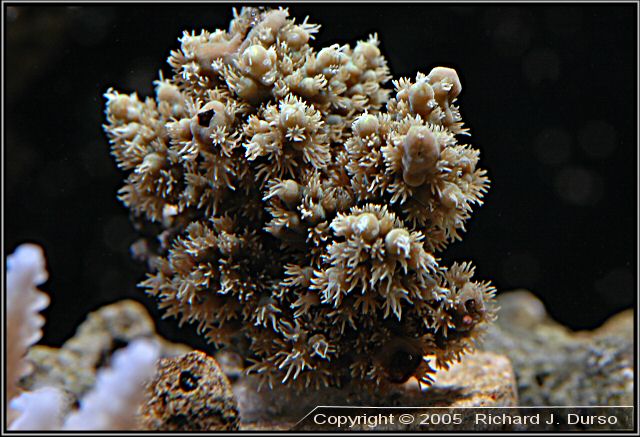
SPS Corals
SPS (Small-Polyped Scleractinian) corals are the primary colonizers and fundamental reef builders. They have incredible growth rates and their skeletons create the backbone of reef structures. These corals were once thought impossible to keep in home aquariums but are now common in advanced reef tanks. They require stable water parameters, strong lighting, and high water flow.
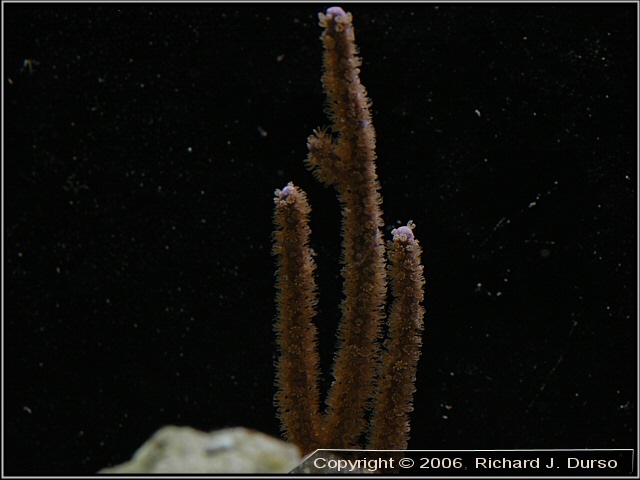
Gorgonians
Gorgonians are species of octocorals with eight-petaled tentacles and mostly have a tree-like shape. They have a colonial coenenchyme supported on an axial skeleton made of a proteinaceous material called gorgonin, which is similar to substance in animal horns. They require good water flow to deliver nutrients and prevent algae growth on their tissue.
