
Knobby Sea Rod (Eunicea sp)
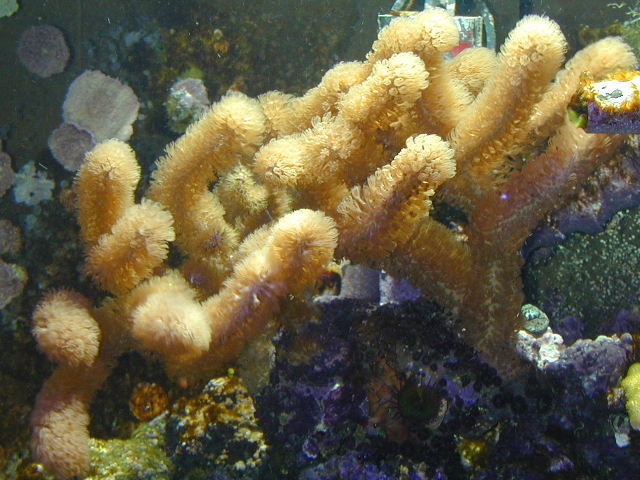
Added to tank on October 11, 1999, given to me by Jim Fox (aka MiNdErAsR) making me a 3rd generation owner of this coral.
These are just beautiful with long flowing polyps that sway in the currents. This picture does nothing to show how nice this soft coral looks. There are three main colonies attached to the rock, the one in the middle is fairly small. The colonies are about 10 inches tall and 15 inches long.
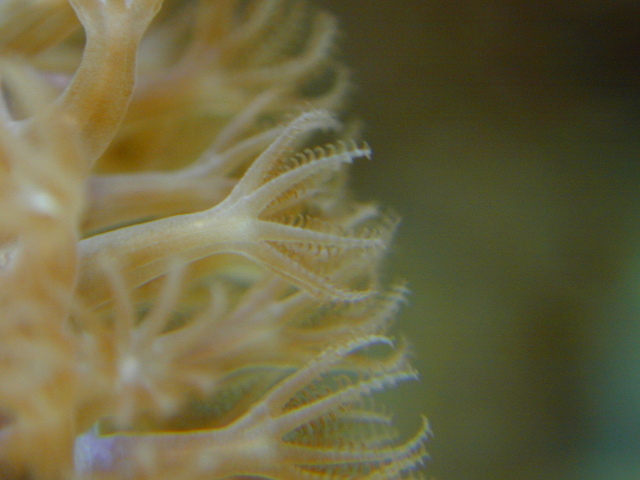
Pictured here is a very close macro shot of the polyps. Picture was taken with a Nikon Coolpix 950 Digital Camera with a Tiffen +7 and +10 closeup lenses.
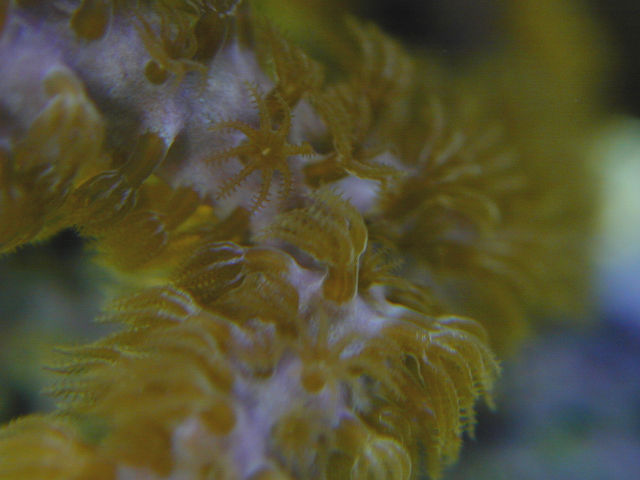
This is also a closeup of the Polyps, however its of a different colony. This colony was shaded slightly and the outer skin of the gorgonian is deep purple. Picture was taken with a Nikon Coolpix 950 Digital Camera with a Tiffen +7 and +10 closeup lenses.
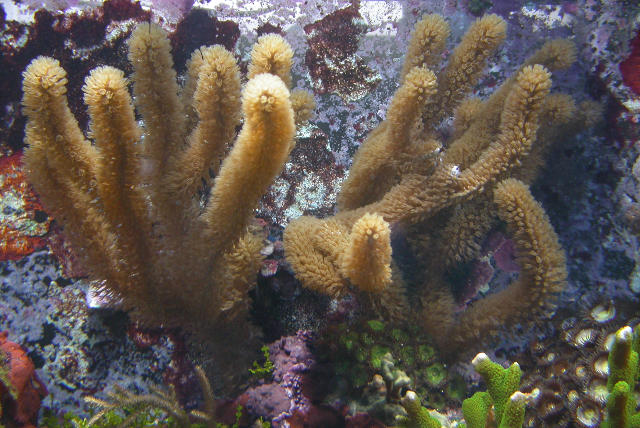
This picture is nearly 3 years after the first picture. May not look like much growth but this coral has had cuttings for propagation removed many times. If you look carefully you can see two recently cut branches on the gorgonian on the right side.
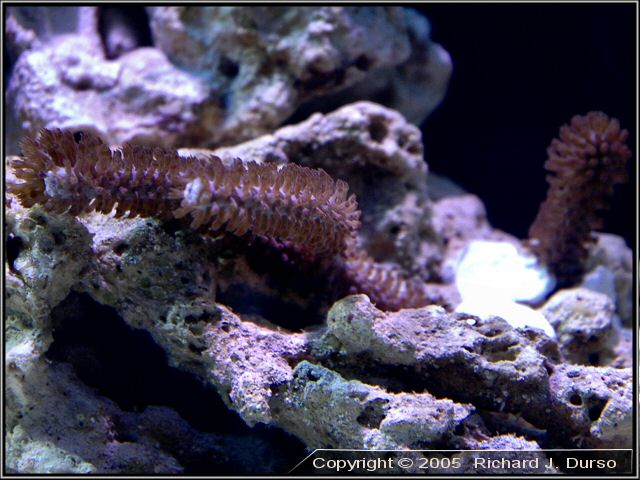
This is one of my favorite gorgonians, commonly called a Knobby Sea Rod (Eunicea sp.). This gorgonian has large fleshy polyps, grows rapidly and is very easy to propagate.
This is a 5th generation captive grown coral. Interestingly, I was also the 3rd generation owner (pictures above). The person I gave it to, gave me some cuttings off his colony for this tank.
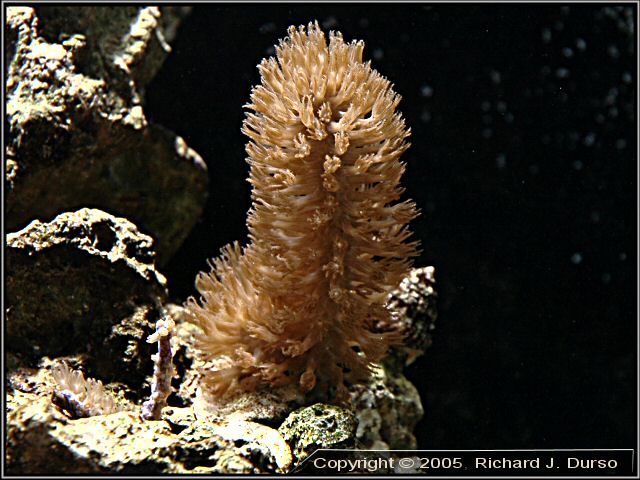
This is the gorgonian to the far right side of the picture above 8 months later.
Most of this time was adjusting to the new tank conditions.
This coral fully expands its polyps again, has encrusted a new base and is starting to develop a new branch off the base.
The picture above shows 20kk lighting whereas this is 10kk 250w HQI halides. Not as blue, but brighter. This coral started to do very well under the lower Kelvin lighting. You can see where the gorgonian next to it died back but has started to recover.
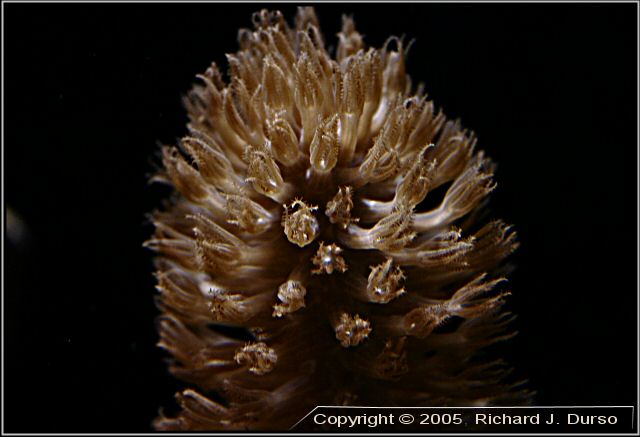
Some of the polyps can be seen with captured pray items. In this case it was from cleaning the front glass of diatoms.
I’m not sure what exactly it was catching. It could have been diatoms, bits of film algae, pods that were running on the glass, other organic material, etc.
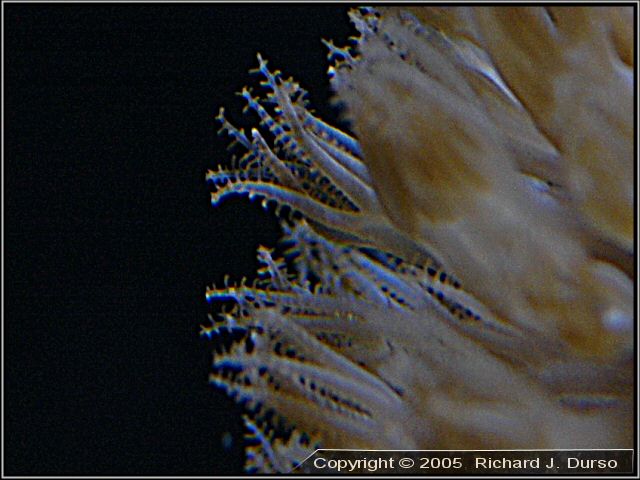
An extreme macro zoomed in towards a single polyp on the side of the gorgonian.
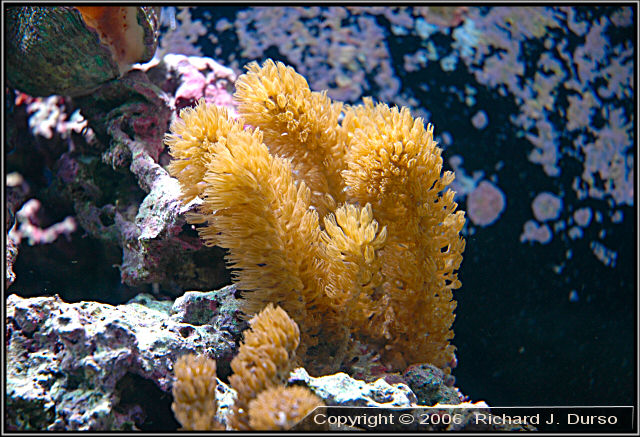
This image shows the gorgonian colony nearly nine months later.
This is how it is supposed to look with elongated polyp extension.
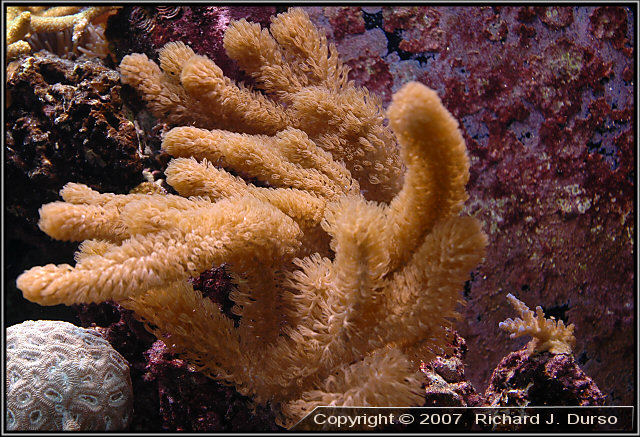
This image shows the gorgonian colony over ten months later.
Several of the longer branches have been removed to reduce aggression with the surrounding corals.
