
LPS Corals
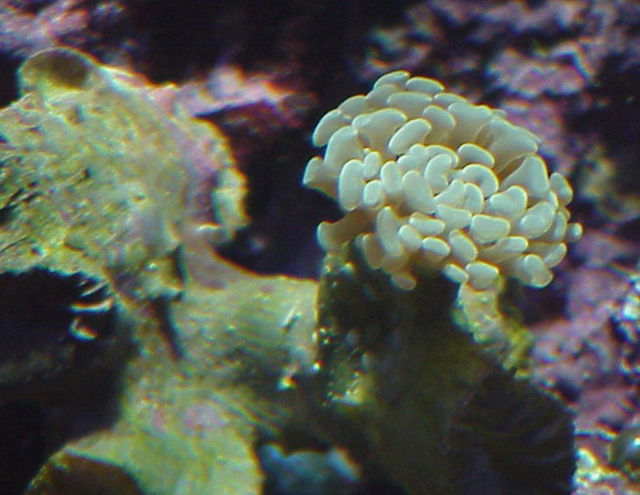
Branching Hammer Coral - Euphyllia ancora
This coral started out hard - the bag lost all water during shipping. Within minutes it showed polyps and went on to show excellent growth. After 20 months it had become a monster coral that was constantly battling nearby corals.
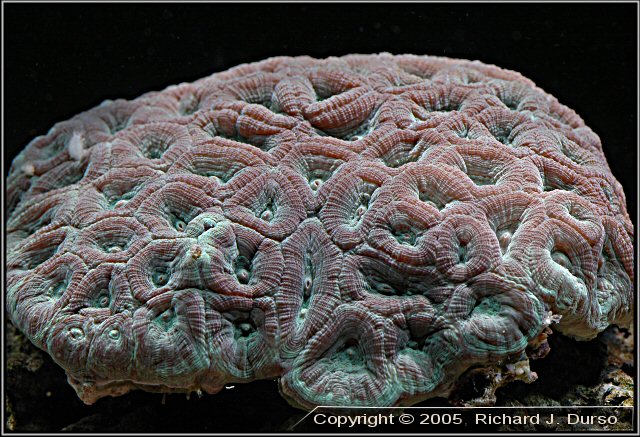
Closed Brain, Moon Coral- Favia sp.
Favia (fay'-vee-ah) are some of the most common corals in the world. They are typically massive, domed or rounded shaped. Feeding tentacles emerge at night, and the flesh typically remains expanded during the day.
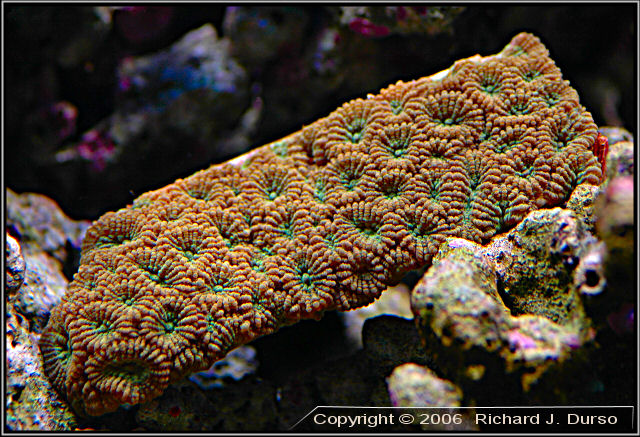
Flat Closed Brain, Moon Coral - Favia sp.
Got this coral for free at IMAC 2006 thanks to FRAGexchange.com. This coral is a frag cut from a larger colony with a tile saw. It has regrown over the skeleton where it was cut and is encrusting along the rock.
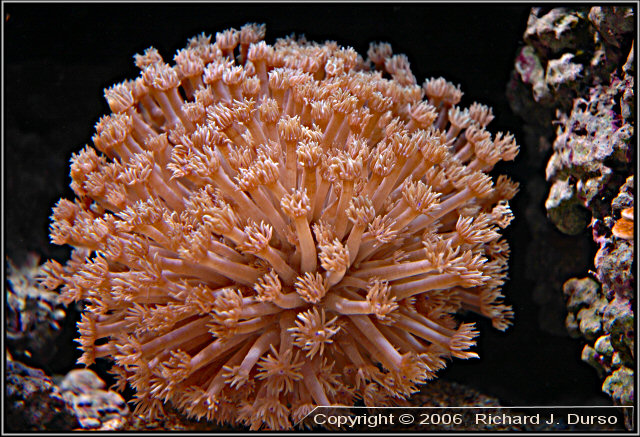
Flower Pot Coral, Daisy Coral - Goniopora columna
Goniopora (goh-nee-oh-pohr'-ah) tend to have very light porous round, columnar or massive skeletons. All species of goniopora have 24 tentacles on each polyp. After over 10 years of reef keeping experience and research, the author finally felt ready to try keeping this challenging coral.
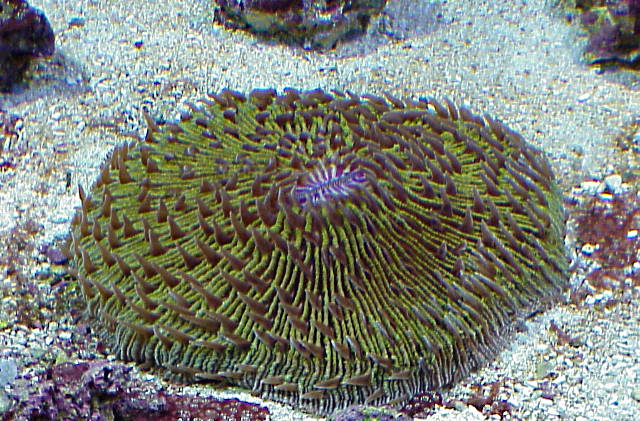
Green Disc Coral - Fungia danai
This coral is about 5 inches round and likes low to moderate water flow with bright light. It's a free-living coral with the ability to walk around the tank by tissue inflation and deflation. It also spawned in the author's tank, releasing streams of sperm from its oral opening.
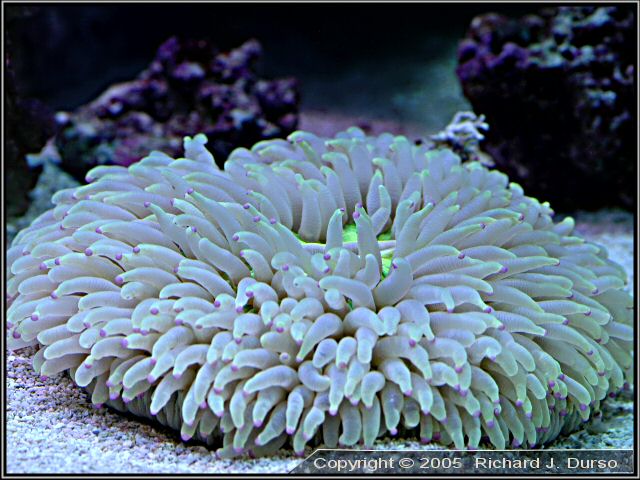
Long Tentacle Plate Coral - Heliofungia actiniformis
Heliofungia (heel'-ee-oh-fun'-jee-ah) have very long and large tentacles with knobbed tips which are extended during the day. They are free-living and usually placed on a soft sandy or rubble substrate with low to medium current and good bright lighting. Unfortunately this coral died from a flesh-rotting infection.
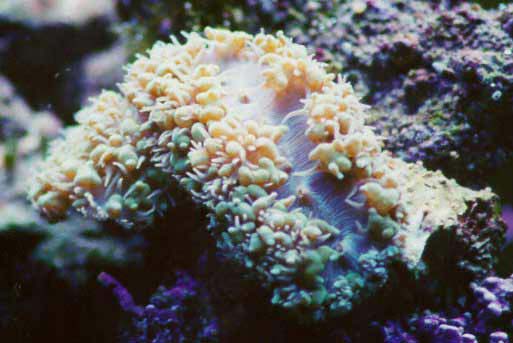
Octobubble Coral - Plerogyra sp.
The sack-like structures on this bubble coral can swell up in size to increase surface area for light. At night they contract and tentacles grow. This coral seemed to be splitting, a rare occurrence for bubble corals. The coral grew significantly over the years, reaching about 10 inches wide.
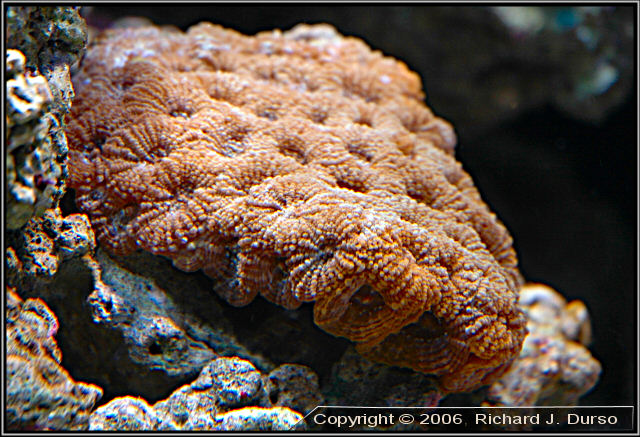
Orange Acan- Acanthastrea echinata
Acanthastrea (ack'-an-thass'-tree-ah) is a pretty common coral in the wild. These corals look very much like other brain corals with thicker tissue and typically grow in cerioid formation (corallites have shared fused walls). This specimen shows spotted orange coloration throughout.
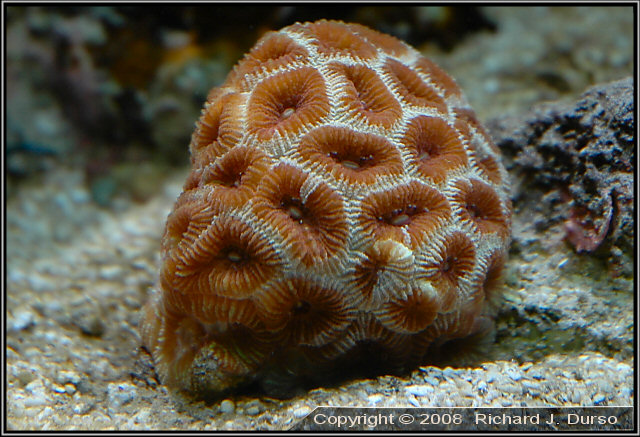
Orange Closed Brain, Moon Coral - Favia sp.
Favia (fay'-vee-ah) are some of the most common corals in the world. They are typically massive, domed or rounded shaped. Feeding tentacles emerge at night, and the flesh typically remains expanded during the day.
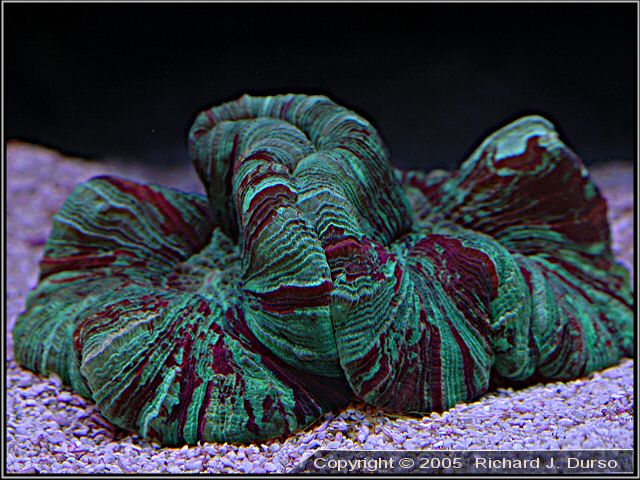
Pacific Rose Coral, Open Brain Coral - Trachyphyllia radiata
Trachyphyllia (track'-ee-fill'-ee-ah) are solitary corals with flabello-meandroid skeleton. T. radiata is considered an unusual import that is rare in nature. This coral was on death's door for many months but completely healed and regained its red and green color after being moved to shade.
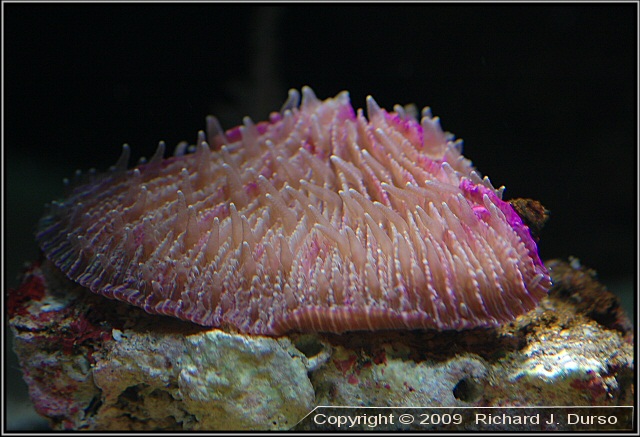
Pink Disc Coral - Fungia danai
This Fungia was actually cut in half on a table saw as part of a coral propagation demonstration by Anthony Calfo. The coral completely healed and showed new growth and excellent polyp extension several months later.
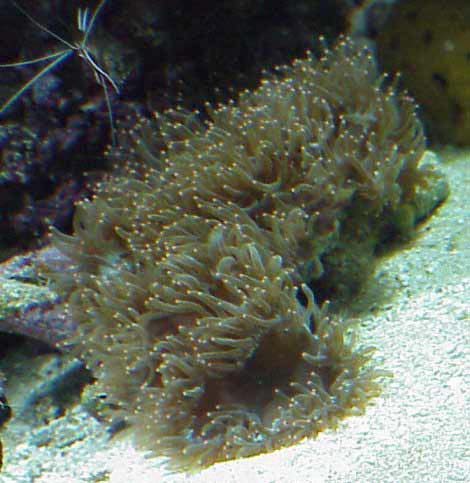
Pink Tipped Elegance Coral - Catalaphyllia jardinei
This coral started as a small frag and grew into a stunning show piece over 8 years, reaching over 8 inches tall and nearly a foot wide. It produced several daughter colonies before the entire colony mysteriously separated from its skeleton in late 2005.
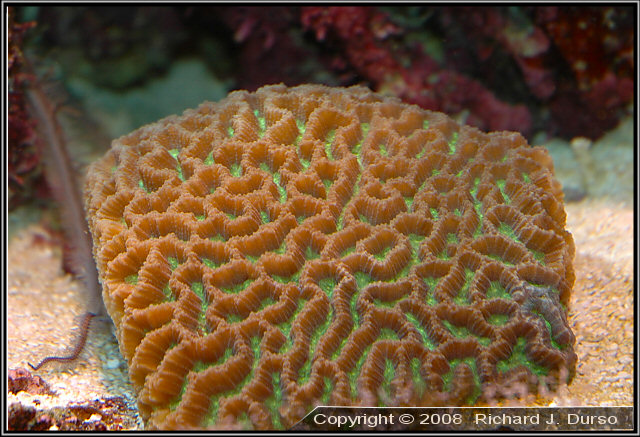
Propagated Maze Brain
This coral had its left side cut off using a tile saw at a local reef club meeting. The coral healed very well and showed no negative side effects to having a chunk cut off. Over a year later it grew significantly thicker but did not re-encrust around the edges.
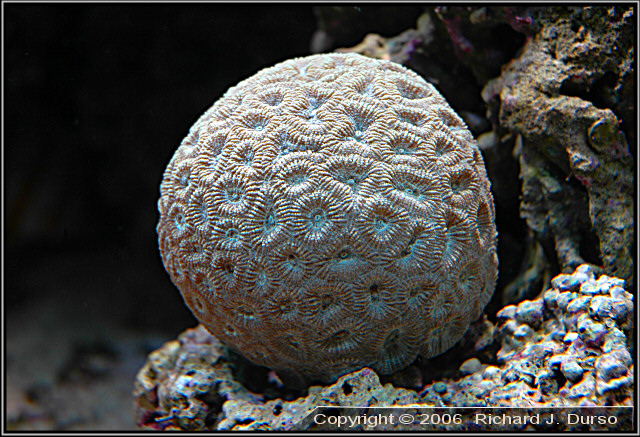
Round Closed Brain, Moon Coral- Favia sp.
Favia (fay'-vee-ah) are some of the most common corals in the world. They are typically massive, domed or rounded shaped. This particular coral is about 5 inches in diameter and is a near perfect sphere with multiple mouths to feed.
