
Snails & Nudibranchs
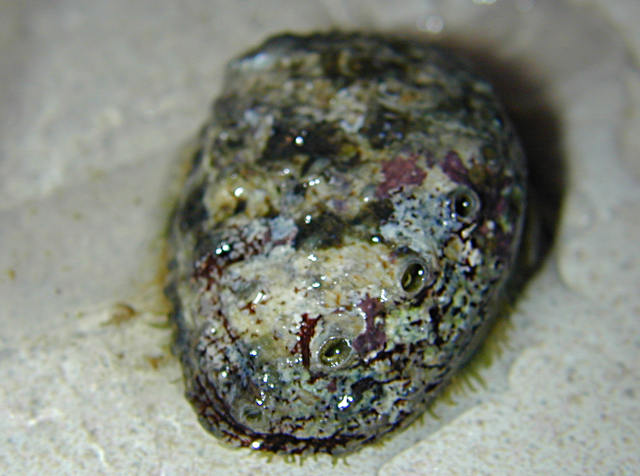
Abalone Snail - Haliotis asinina
Pictured here is a rather odd snail called an Abalone - one of the most expensive snails in the hobby. They have an unusually strong bond with a surface, and trying to remove them even from the plastic bag is likely to damage the animal. They look like flattened snails with a very low profile. The holes in the top of the shell are respiratory pores connected to the gill chamber. Although they lack a brain, they do have a pumping heart usually located on the left side of the animal.
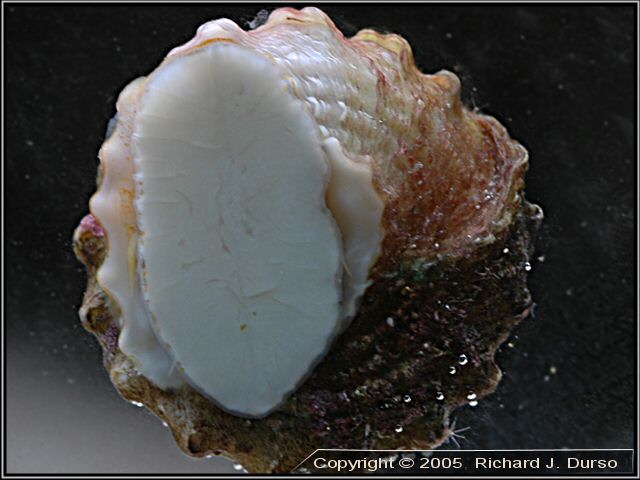
Astraea Snail
Astraea snails are excellent algae eaters and are among the most popular snails in the reef keeping hobby. They are known for their ability to consume various types of algae including diatoms, green algae, and even some types of cyanobacteria. These snails have a distinctive cone-shaped shell and are generally reef safe.
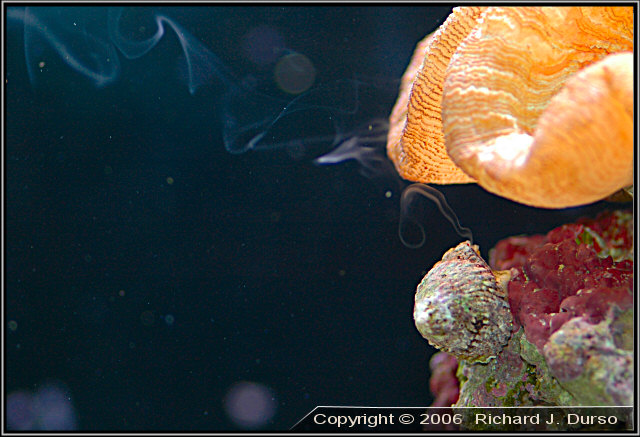
Astraea Snail Spawn
This photo captures a rare moment in the home aquarium - an Astraea snail releasing sperm. These snails belong to Class Gastropoda, Subclass Orthogastropoda, Superorder Vetigastropoda. Astraea snails are excellent algae grazers in reef tanks.
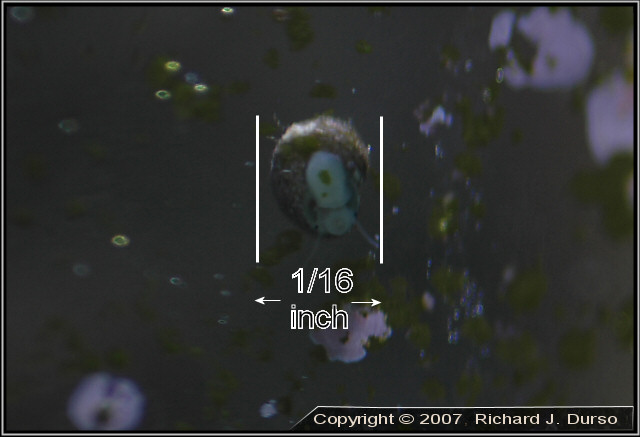
Baby Trochus - unknown species.
Finding baby snails in the aquarium is always exciting for a reef keeper. These baby Trochus snails were discovered in one of the overflow chambers, indicating successful breeding in the home aquarium. The one pictured was one of the larger ones found, measuring about 1/16 inch across (1.5mm). Trochus snails are excellent algae eaters and their ability to reproduce in captivity is a good sign of tank health.
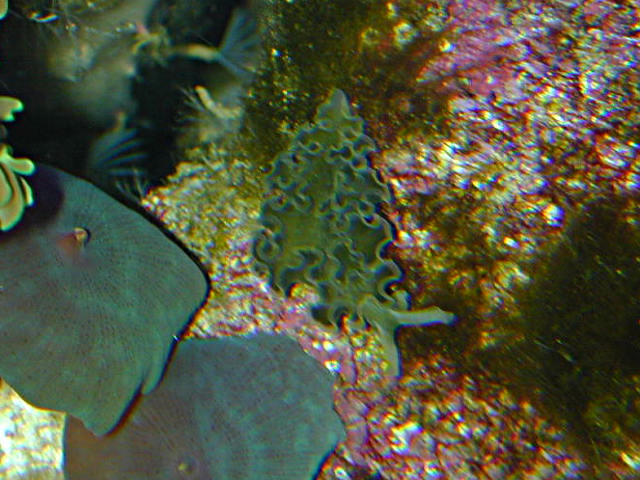
Bryopsis Eating Nudibranch - Elysia crispata
This is one of the few animals that will eat Bryopsis, a toxic form of hair algae that all fish will stay away from and most snails will die from if they try to eat it. Elysia crispata is a specialized feeder that can help control Bryopsis outbreaks in the reef tank. These nudibranchs are striking with their ruffled appearance and vibrant colors.
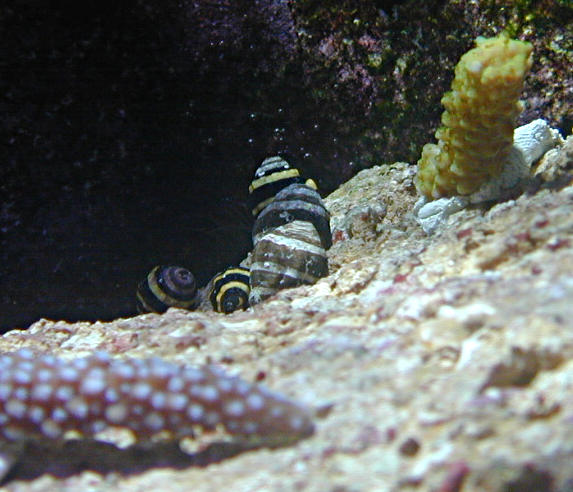
Bumble Bee Snail - Engina mendicaria
This is a grouping of Bumble Bee Snails when they were first introduced to the aquarium hobby. At first it was claimed they were 'Reef Safe' which is partly true in that they likely will not bother corals. However they are predators, not detrivores. The shell shows a white or yellowish background with a few black bands which resembles the yellow and black pattern of wasps and bees.
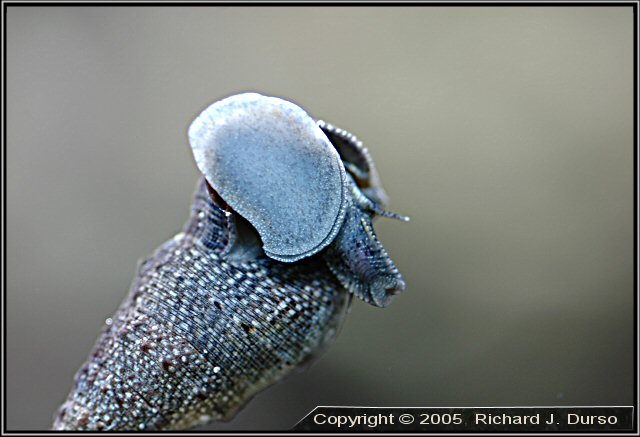
Cerith Snail - Cerithium sp.
Cerith snails are long-lived and do well in reef aquaria. They typically stay on the glass and frequently rest buried in the sand bed. They are excellent algae grazers and help with tank maintenance.
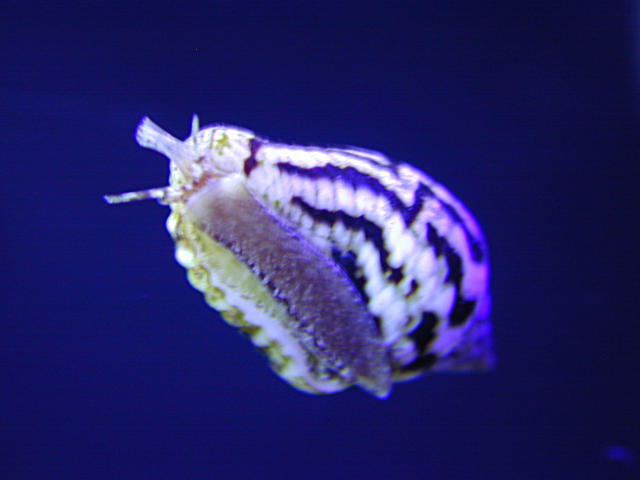
Columbellid sp. Snails
This is an example of a Columbellid snail. They have a shell shape very similar to Nassarius snails but look and act very different. These snails are interesting additions to the reef tank, often coming in as hitchhikers on live rock. They play a role in the tank's cleanup crew.
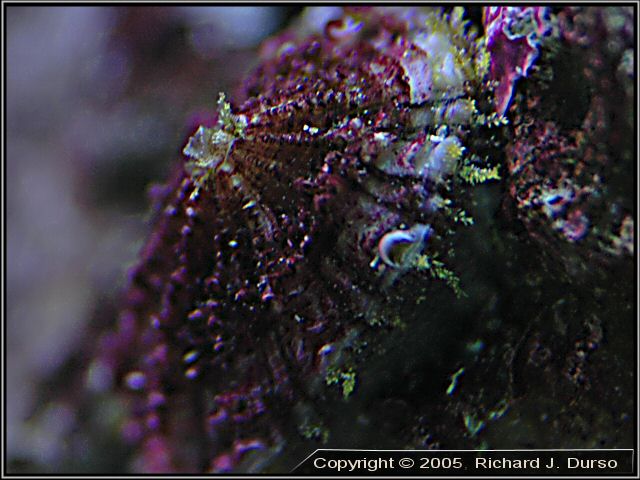
Limpet - unknown species
Limpets are animals known for their ability to cling to rocks. They don't use suction - instead they have a very strong muscular foot that grabs onto small imperfections in the rock. They have a distinctive oval shaped shell with the peak more-or-less near the center. Limpets are primarily algae grazers including coralline algae.
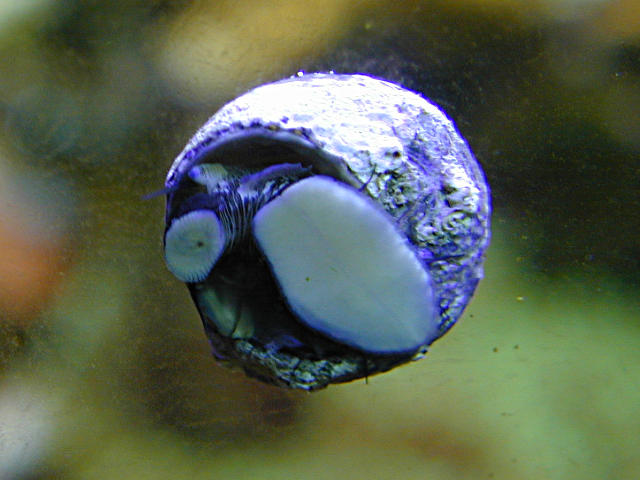
Margarita Snail - Unidentified sp.
This is a closeup of a Margarita snail which is a very good diatom algae eater and does a very good job at reducing short turfs of hair algae on rocks. However, this snail doesn't stay on the rocks and mainly stays on the glass. These snails stay fairly small - the snail pictured is about the size of a U.S. Nickel coin, and they've never been seen to get as big as a U.S. Quarter.
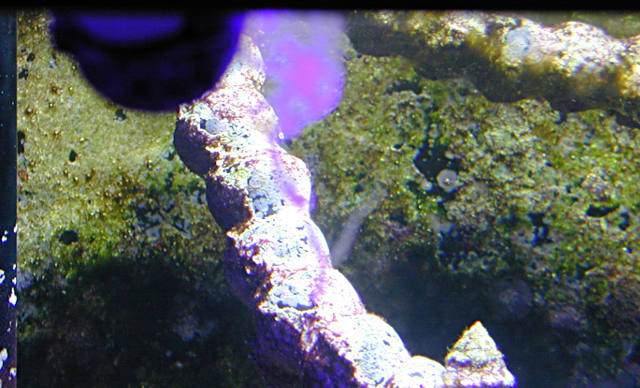
Tiger Trochus Snail Spawning
On May 10th, 2000, the tank looked a little cloudy. After a few minutes of observation, a snail was seen at the water surface releasing sperm - a spawning event. Seeing snails reproduce in the home aquarium is always exciting and indicates good tank conditions. This is a sign that the tank environment is healthy enough to support the complete life cycle of these algae-eating snails.
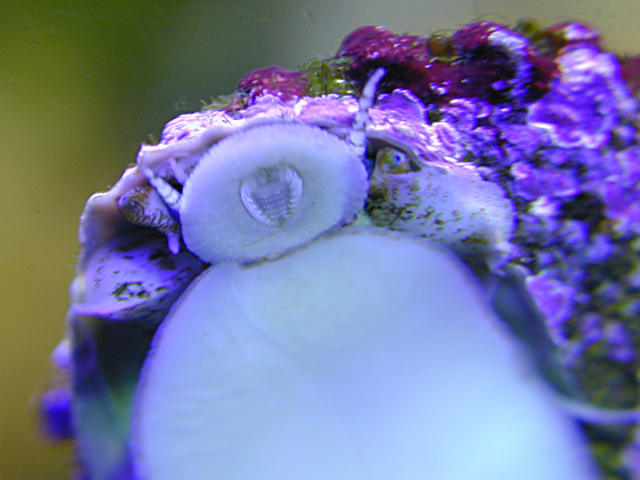
Tiger Trochus Snails - Trochus sp.
This is a nice close-up of the face on a Tiger Trochus snail. These snails are excellent algae eaters and are popular in the reef hobby. Tiger Trochus snails are known for their striking patterned shells and their ability to consume various types of algae, including diatoms and green algae. They are generally reef safe and make excellent members of a cleanup crew.
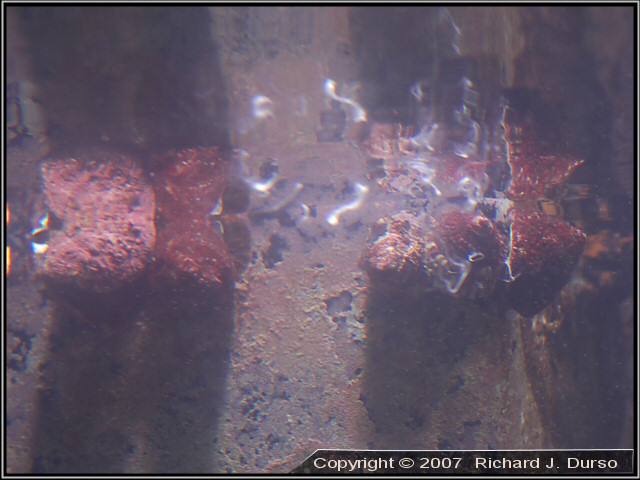
Trochus Snail Spawn
This photo captures Trochus snails releasing sperm during a spawning event. Observing reproductive behavior in home aquariums is always exciting and indicates that the tank conditions are healthy enough to support the complete life cycle of these snails. Trochus snails are excellent algae eaters and their successful breeding is a testament to good tank management.
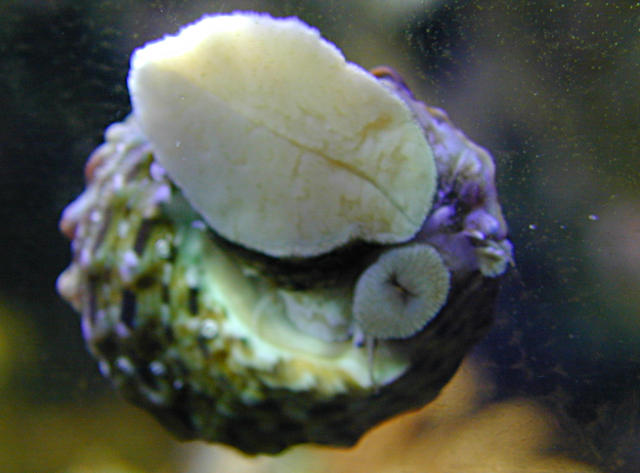
Turbo Snail - Unidentified sp.
Pictured is the underside of a typical Mexican Turbo Snail. This one is rather small. Larger adult snails have shells several inches across. These snails are excellent algae grazers in reef tanks, known for their ability to consume large amounts of algae including macroalgae.
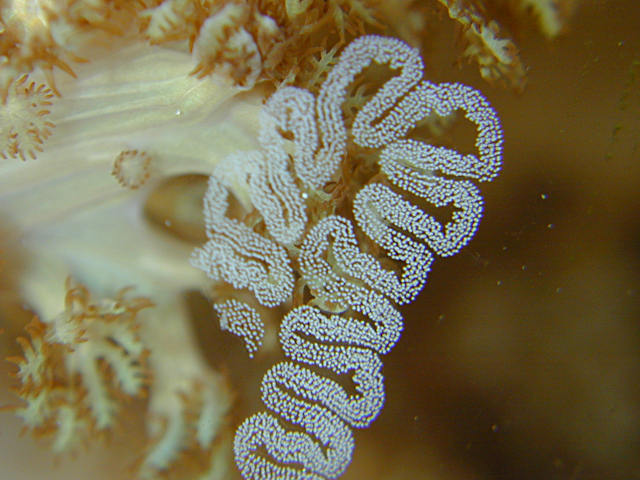
Unknown Species Snail Eggs
This is an egg track photographed the day after a massive tank spawn. While the exact species is unknown, it may have been from one of the Trochus or Astraea snails in the tank. Finding snail eggs in a home aquarium is always exciting as it indicates successful breeding conditions. These egg cases will hopefully develop into baby snails that will join the cleanup crew.
