
Sea Stars
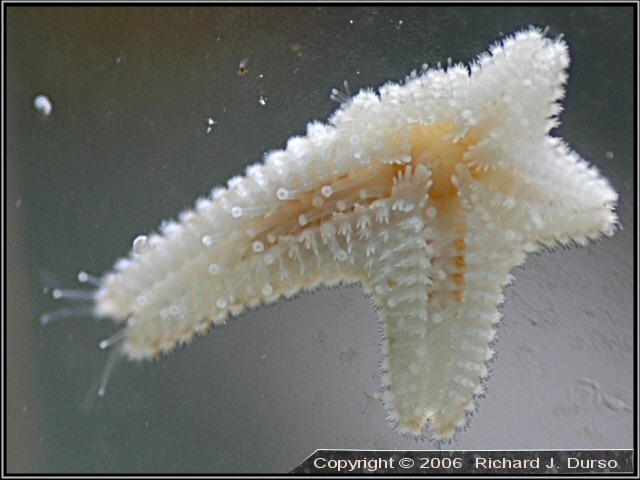
Asterina Sea Star - Asterina sp.
This is a fairly common star found in many reef aquaria, coming as hitchhikers on live rock. They are very small (size of a US Penny) cushion stars nearly always white or gray and irregular looking due to asexual reproduction by dropping legs. It's very rare to see a symmetrical looking Asterina - typically they have 1 to 3 fully developed legs. The identification as Asterina sp. is commonly used but not confirmed.
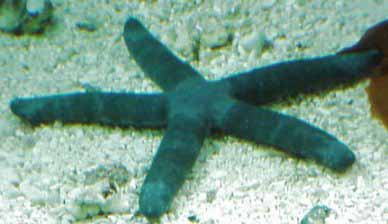
Blue Linkia Sea Star - Linkia laevigata
Linkia sea stars are among the few sea stars acceptable for reef aquariums. They are non-selective surface grazers from the Indo-Pacific and can survive on a diet of aquarium detritus and debris. However, they are known to ship very poorly with high mortality rates. Extra careful acclimation is recommended.
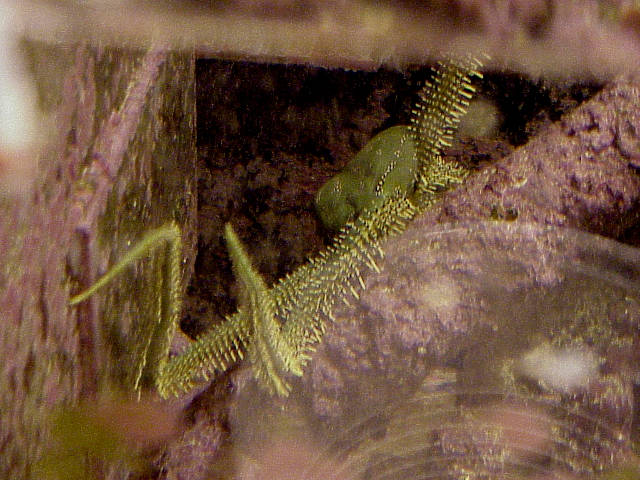
Green Brittle Sea Star - Ophiarachna incrassata
This is the notorious green brittle star - considered non-reef safe. With arms about 8 to 10 inches long, it spirals its arms around its body and lifts off the substrate to create a trap. When a shrimp or fish swims into the trap, the arms slam shut and long spike-like teeth dig into the prey. This one now lives in the sump after eating several peppermint shrimp.
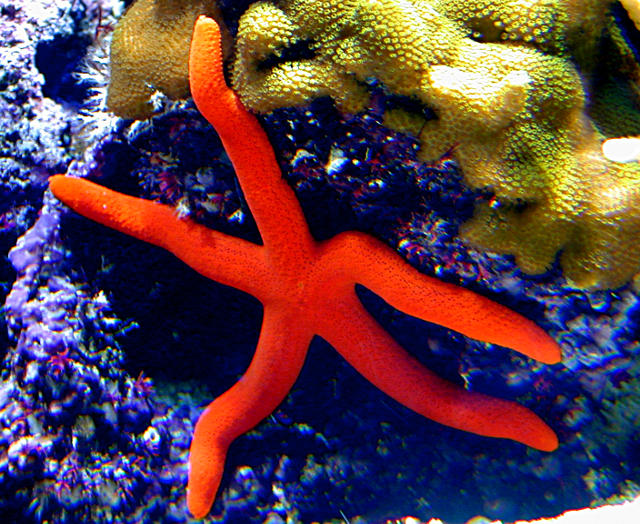
Orange Linkia Sea Star - Linkia sp.
Linkia sea stars are among the few sea stars acceptable for reef aquariums. They are non-selective surface grazers from the Indo-Pacific that can survive on a diet of aquarium detritus and debris. However, they are known to ship very poorly with high mortality rates, so careful acclimation is essential.
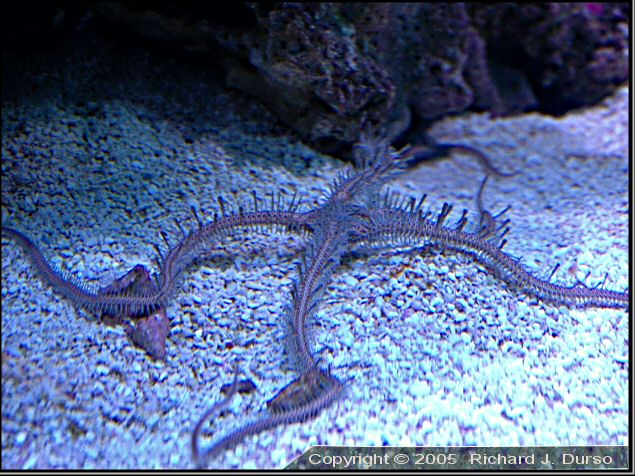
Pink Brittle Sea Star - Ophiomastix sp.
This is a fairly rare pink brittle sea star that is an excellent addition to the reef tank. Like other brittle stars, it helps with tank maintenance by scavenging for detritus and leftover food. Belongs to Order Ophiurida, Family Ophiocomidae.
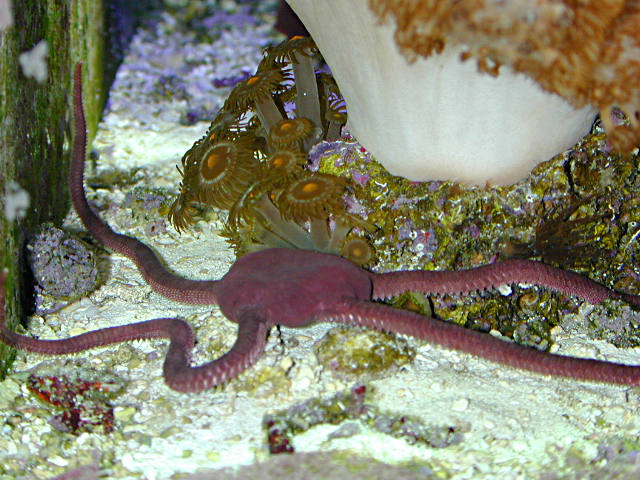
Red Serpent Sea Star - Unknown sp.
This is a typical serpent star fish sold in the aquarium trade. They are great scavengers feeding on uneaten food, detritus, and debris. Usually they stay hidden during the day with just the arms exposed, but when food is present they come running out. While direct feeding may not be needed if the tank is fed enough, these sea stars will readily accept small chunks of silversides.
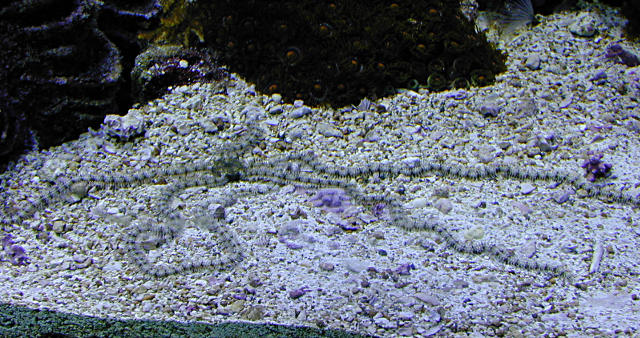
White Brittle Sea Star - Unknown sp.
This is a really neat sea star with a body about the size of a US penny but arms each close to 1 foot long - rare to find such long arms on a sea star. Like other brittle stars, it's a scavenger that helps clean up detritus and leftover food.
