
Clams
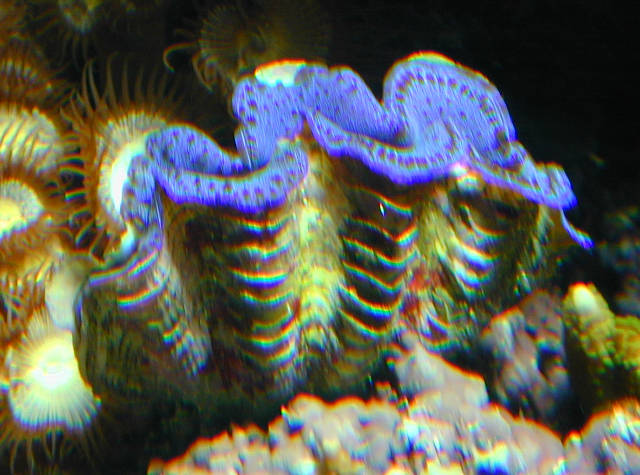
Blue Spotted Tridacna crocea Clam
This clam arrived in poor condition (dry in a wet box) but recovered and did well placed high in the tank under intense 400w lighting.
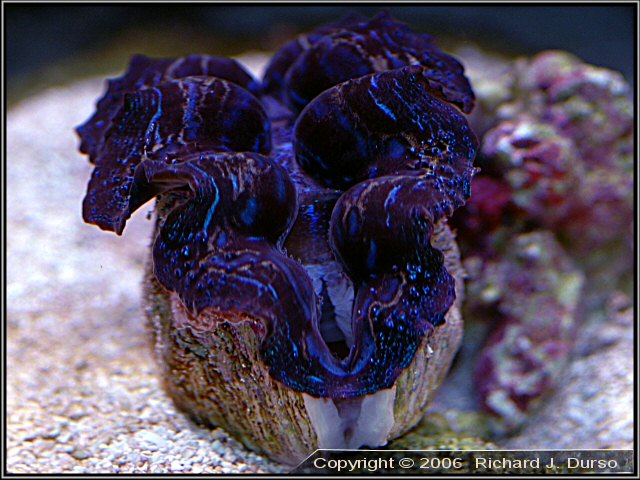
Blue Tridacna crocea Clam
T. crocea is the smallest of the giant clams, typically reaching 4-6 inches. This high-light species lacks the pronounced shell scales of other Tridacna. Unfortunately this clam stopped opening in May 2006 and did not recover.
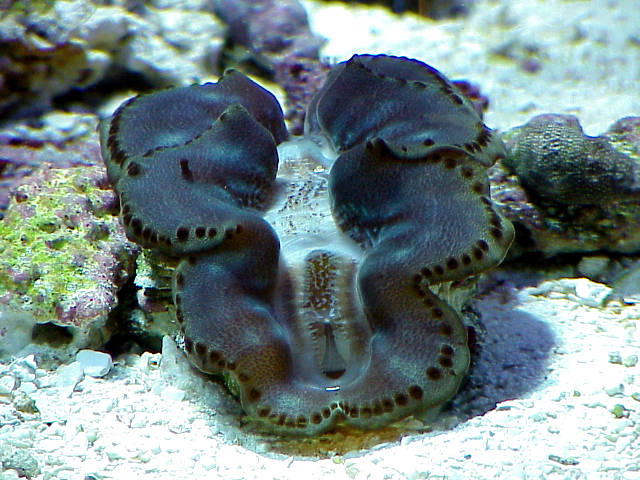
Blue Tridacna maxima Clam
This Tridacna maxima clam preferred to settle on the sand rather than higher in the rock work. These clams can reach 12-16 inches in the wild and are considered a high-light species with blue and green mantles.
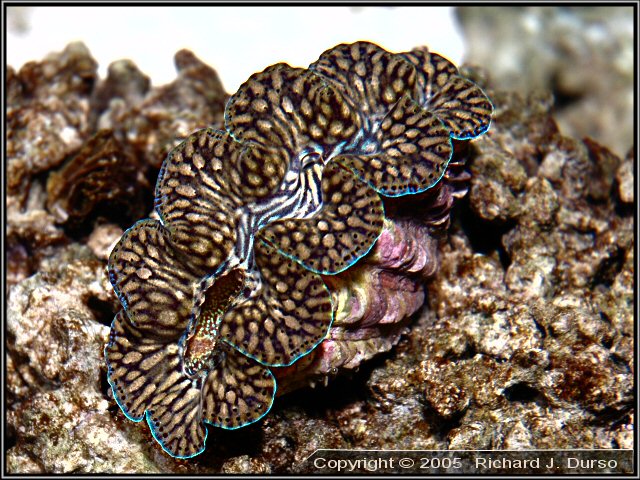
Gold Tridacna maxima Clam
T. maxima can reach 12-16 inches in the wild and should be considered a high-light species. This gold variety showed new rows of scutes and color changes from blue to yellow over 7 months.
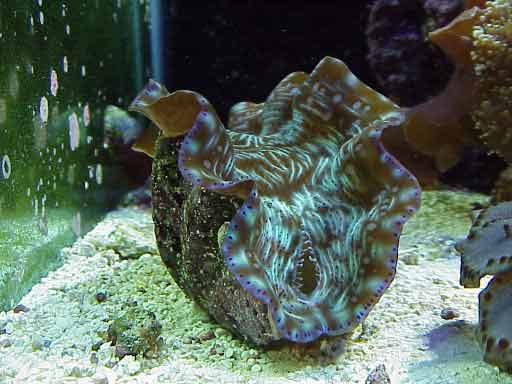
Golden Tridacna derasa Clam
T. derasa can reach up to 20 inches in the wild with a smooth shell. This clam showed remarkable growth, going from 5 inches to just over 8 inches in 14 months, and changed color from blue to golden yellow.
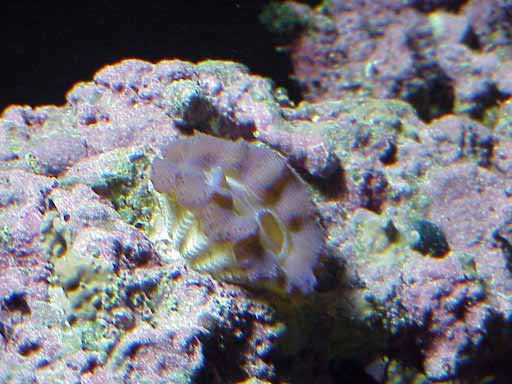
Little Bitty Blue Tridacna crocea
This tiny 1.5-inch 'super' grade crocea clam died within 3 days, never having a chance to show its true colors in the tank.
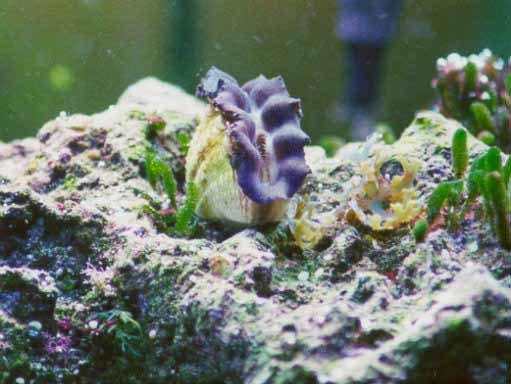
Little Blue Tridacna spp. Clam
Originally a dark blue color, this clam lost its blue coloring under VHO lighting. After moving to a 180g tank with metal halide lighting, the clam died within two weeks, apparently unable to cope with the lighting change.

Mail Order Clam Acclimation
A mail order shipment of three Tridacna crocea clams from Clams Direct, showing the packaging, inspection process, and drip acclimation procedure used to safely introduce the clams to the tank.
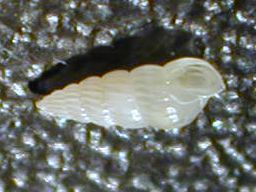
Parasitic Pyramidellid Snails
The last thing you want to see on your clam shells. These parasitic snails are difficult to spot, appearing mainly at night or early morning, and can produce several hundred offspring per week.
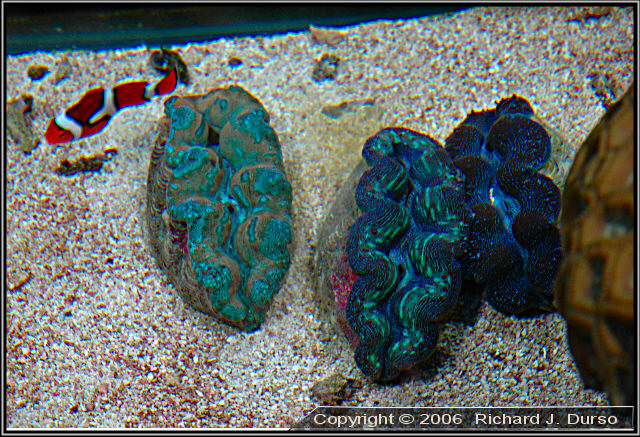
Three Tridacna crocea Clams
Three Tridacna crocea clams added to the display at the same time, ranging from 3.5 to 4.5 inches. One of these clams was featured on the cover of ReefKeeping magazine in May 2007.
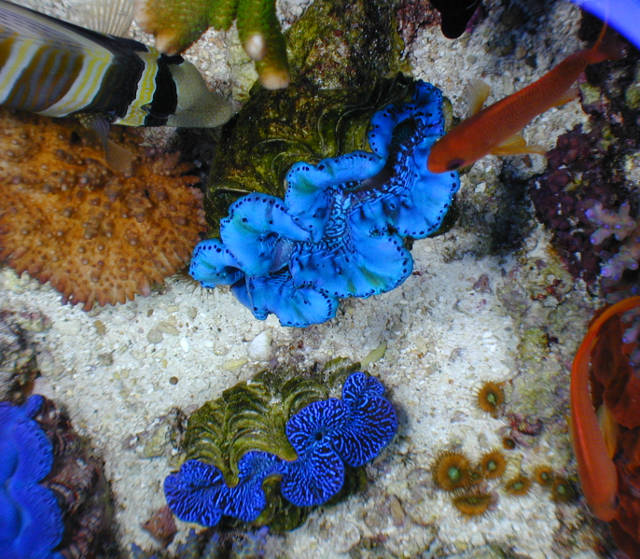
Three Tridacna maxima Clams from Above
Three Tridacna maxima clams as viewed from above, showing their colorful mantles. The sailfin tang and two anthias can also be seen swimming above the clams.
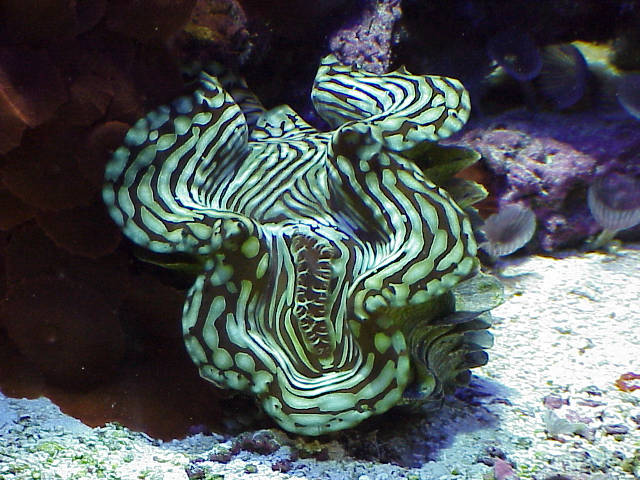
Tiger Stripe Tridacna squamosa Clam
T. squamosa can reach 20-24 inches and doesn't need as much light as crocea or maxima. Unlike the author's other clams, this one showed minimal growth over 3 years and eventually died after breaking its shell hinge.
